
Experimental with Amale Ghalbouni & Francesca Antenucci on Leading Cultural Change in Financial Services
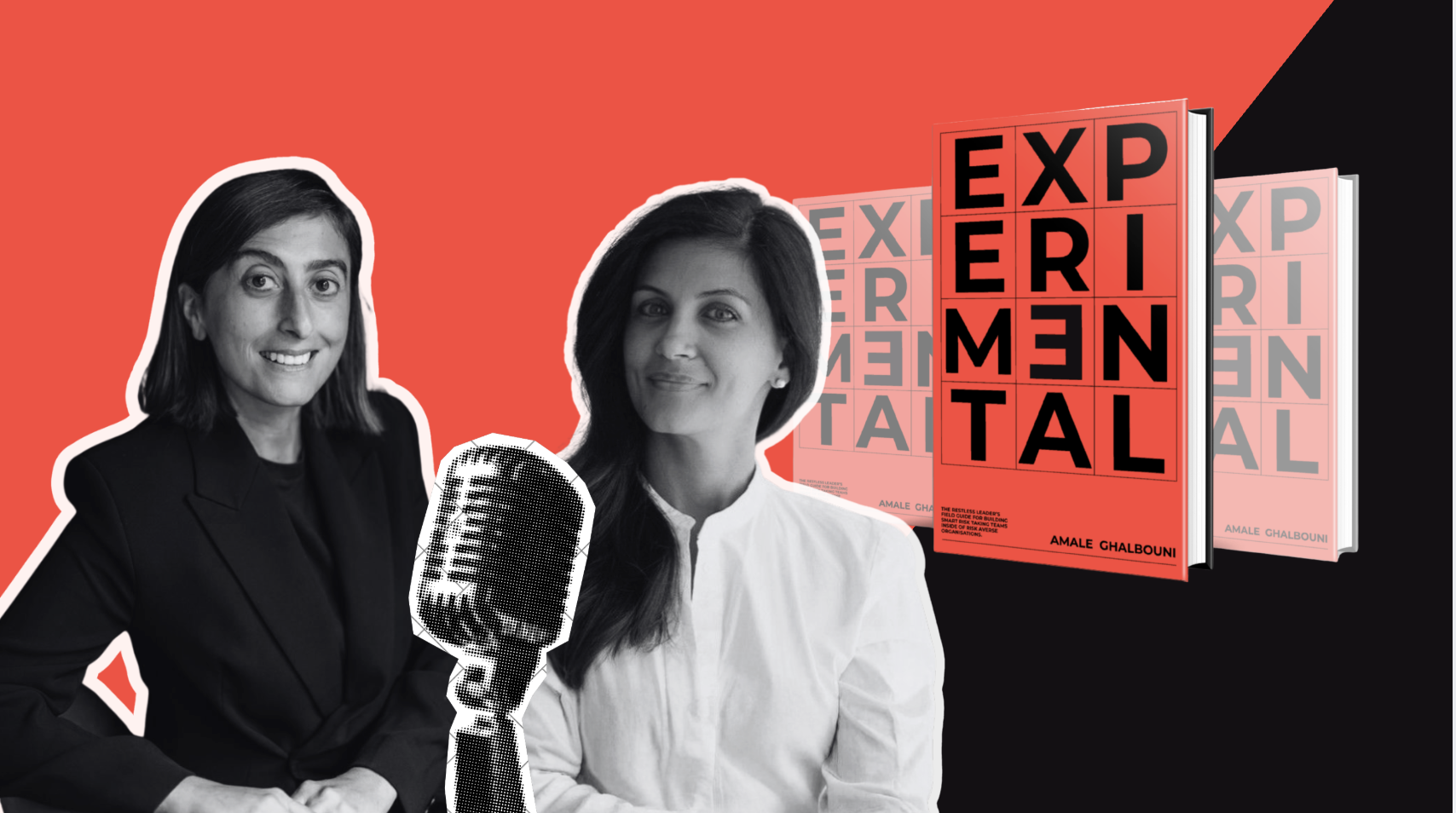
Amale Ghalbouni & Francesca Antenucci in conversation. Excerpt taken from the conversation featured in Experimental
The same leader can thrive in one culture and feel permanently frustrated in another.
Francesca Antenucci, Head of People and Culture at Generali, has experienced both.
She spent almost 15 years at Bloomberg, where the speed, ownership and directness felt like a natural fit.
She later moved into Generali, a global, highly regulated business with almost 200 years of history, multiple markets and a very different relationship with process.
Our conversation explores what happens when a restless leader enters an environment that doesn’t naturally move at their pace.
Do you adapt? Keep pushing? Or decide the culture no longer fits who you’re becoming?
These insights feature in my book Experimental.
Curiosity created the career
Francesca grew up in Italy and began feeling curious about the world outside it as a teenager.
A study trip to London and Cardiff led her to study international economics. She later spent time in Paris, Dublin, London and New York, with further work across Asia.
She describes herself through The Snail and the Whale: the snail with itchy feet who wants to discover what else exists.
That curiosity also moved her across professional boundaries.
At Bloomberg, Francesca began working with software engineers even though she had no technical background. She learnt to map user flows, challenge clunky processes and write product requirements.
Later, she moved from the business into HR without an HR degree.
Someone saw the combination the role needed: operational experience, leadership capability, systems thinking and knowledge of the employee experience.
The opportunity didn’t match her credentials.
It matched her curiosity and potential.
“If you have a curiosity, go and find out.”
Culture becomes real through leadership behaviour
Bloomberg felt like home to Francesca.
The organisation was fast, ambitious, collaborative and constantly changing.
She describes the “Mike ethos”, named after founder Michael Bloomberg.
Leaders were approachable. People worked without special executive offices. Employees were expected to solve problems beyond their formal remit and involve the experts required to move them forward.
The culture wasn’t a set of values on a wall.
It was visible in the way Michael Bloomberg and other leaders behaved.
“Anybody can approach me, anybody can come to me and talk to me, and he means it.”
Leadership behaviour repeated at every level, creating a domino effect through the organisation.
That’s how culture scales.
Not because everyone uses the same language, but because thousands of everyday decisions reinforce what the organisation says it values.
Clarity gives people room to move
Bloomberg operated inside financial services, with significant regulation and scrutiny.
Yet Francesca experienced a high level of ownership and freedom.
A large part of that came from clarity.
People understood what mattered, what the organisation expected and how they were meant to behave.
The recruitment process was also honest about the culture. The pace wouldn’t suit everyone, and the company didn’t pretend otherwise.
Once people joined, there was little gap between the culture they’d been promised and the culture they experienced.
Clear values and priorities reduced the need for endless instructions.
People could use judgement because they understood the direction.
That’s a recurring lesson in Experimental.
Autonomy without clarity can feel like abandonment. Clarity creates the guardrails that make intelligent action possible.
From one voice to a chorus
Generali presented Francesca with a very different environment.
Bloomberg was privately owned and strongly shaped by one founder.
Generali is publicly listed, operates across multiple countries and has grown through acquisitions over nearly two centuries.
Francesca describes the difference as moving from one voice to a chorus.
Messages can become diluted as they travel through the organisation. Different geographies have their own histories, needs and cultures.
That creates complexity, but it also creates local empowerment.
A global goal may be shared while each market has freedom to choose the route that best fits its context.
The destination remains common. The mechanism can vary.
This is a useful model for complex organisations that need alignment without forcing every part of the business into an identical process.
The spaceship and the paperwork
Francesca uses a memorable comparison.
At Bloomberg, people were constantly building and improving the spaceship.
At Generali, the spaceship already existed, but you needed to sign the paperwork before taking off.
The organisation has scale, expertise and significant capability. It also carries more governance, reporting and process.
For a restless leader, the tension is real.
You can see where you want to go and feel ready to launch. The wider system needs you to slow down.
Some of that caution is legitimate. Large regulated businesses have responsibilities and consequences that smaller organisations don’t carry in the same way.
The leadership challenge is learning how to work with the environment without allowing it to remove all momentum.
Read the room before you push
Francesca believes this experience has made her a more rounded leader.
“You need to learn to read the room.”
That means knowing when to present the idea, when to listen, when to challenge and when the organisation needs more evidence or a different sequence.
A good idea introduced at the wrong moment can still fail.
Reading the room isn’t hiding your ambition or becoming consumed by politics. It’s understanding how change happens in the environment you’re actually in.
Instead of asking only why people are slowing you down, ask what they’re protecting, what pressure they’re under and what would make the move feel credible.
Is the discomfort stretching you or shrinking you?
Francesca compares organisational cultures to jackets.
Bloomberg felt like a perfect fit.
Another environment might feel like an oversized coat. It isn’t necessarily wrong, but it requires you to move differently.
That discomfort can develop patience, adaptability and a wider range of leadership skills.
It also has limits.
“You decide after that stretch: am I willing to stretch more, or is it no longer a matter of stretch?”
Experience helps leaders distinguish between a productive challenge and a fundamental mismatch.
Seniority isn’t only the number of years you’ve worked. It’s knowing yourself well enough to understand which conditions help you grow and which ask you to abandon too much of who you are.
Learning can become a lifeboat
Francesca’s tactical advice for leaders in a frustrating environment is to focus on their own development.
Choose a period of time. Decide what you can still learn and which work you’ll remain proud of.
“Be a little bit selfish.”
Learn a skill. Understand another function. Strengthen your network. Surround yourself with people who restore your energy.
The point isn’t staying indefinitely in a damaging culture.
It’s ensuring that when you leave, you take more with you than frustration.
Francesca also wants to leave every team or organisation better than she found it.
That might mean a stronger person, a better process, a difficult conversation started or a foundation someone else can build on.
This idea connects deeply with Experimental, my bestselling business book on leadership and transformation.
The book is for restless leaders operating inside systems that weren’t designed for their pace or ambition.
My work as a leadership keynote speaker helps those leaders adapt without losing themselves and turn frustration into a next practical move.
Ask yourself:
Is this environment stretching me into a stronger leader, or asking me to become someone I no longer want to be?
To unlock this conversation and all the other conversations featured in the book,
Grab your copy of Experimental now →
And if you’d like to bring these themes to your audience, get in touch or connect with me on Linkedin.