
Experimental with Amale Ghalbouni & Steve Peralta on Maintaining an Experimental Culture in a Fast Growing Scale-Up
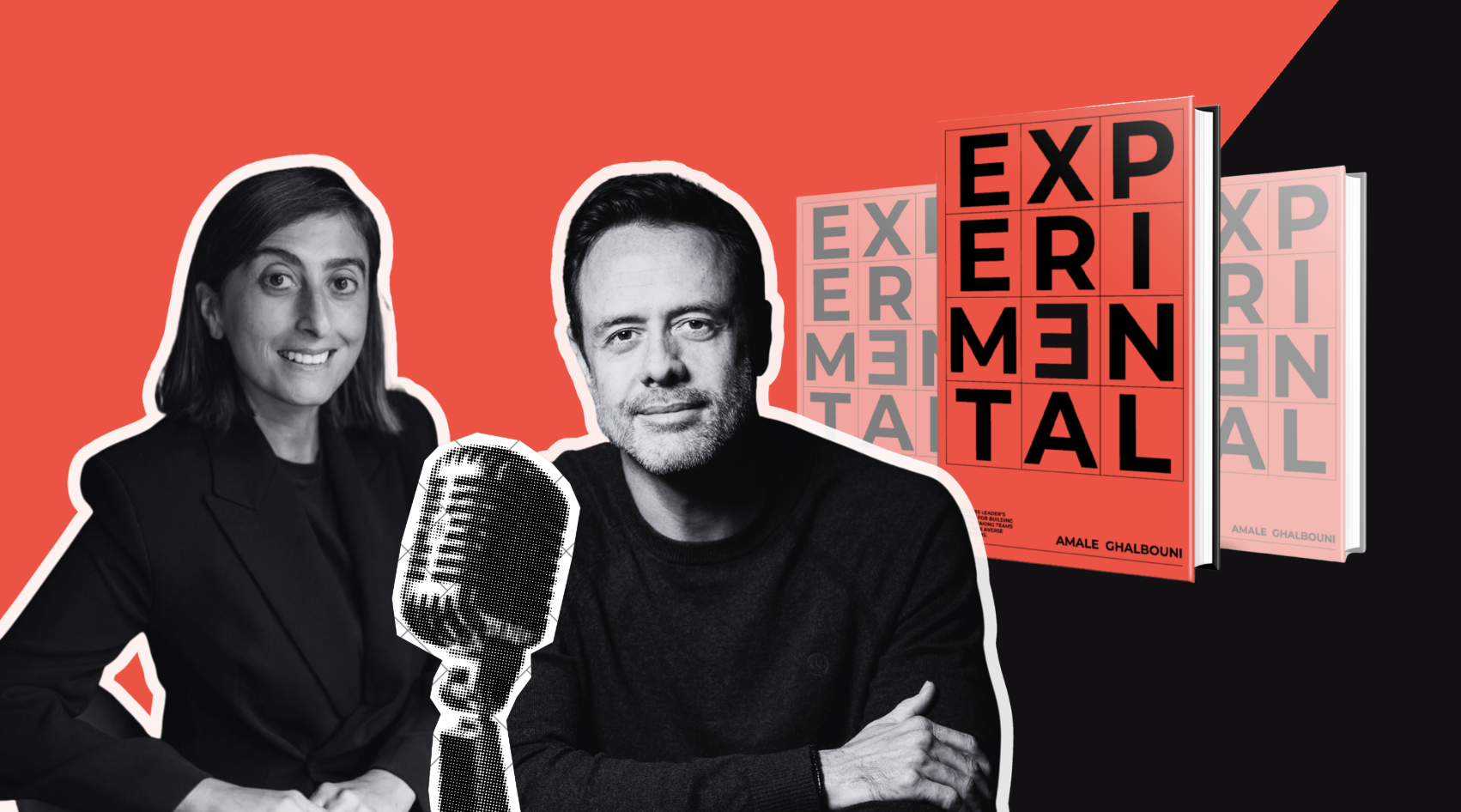
Amale Ghalbouni & Matt Barker in conversation. Excerpt taken from the conversation featured in Experimental
Can an organisation care deeply about people and still demand high performance?
Steve Peralta believes the answer has to be yes.
Steve is co-founder of Unmind, the workplace mental health platform. His route into technology entrepreneurship began with music, acting, personal training, coaching and corporate wellbeing rather than a carefully designed founder plan.
He followed what he calls a “fuzzy” sense of purpose: helping people flourish while staying true to himself.
That eventually led to Unmind, a company built around proactive workplace mental health.
Our conversation explores what happened as that purpose-led start-up grew, faced commercial pressure and had to question whether its much-loved culture was still serving the organisation.
These insights feature in my book Experimental.
People and performance aren’t opposing choices
Unmind built a highly human, empathic culture.
As the company grew, Steve became increasingly aware of the risk on both sides.
A business focused only on performance can exhaust people, damage trust and create short-term results that can’t be sustained.
A business focused only on care can avoid accountability, difficult conversations and the standards required to survive.
“We weren’t going to become a mechanistic organisation, but equally we weren’t going to become a soft, happy family that doesn’t perform.”
Steve uses polarity thinking to hold these apparently competing needs.
Instead of asking which side should win, leaders examine the value and shadow side of both.
What becomes possible when we invest in wellbeing?
What happens when care turns into avoidance?
What does strong performance enable?
What happens when results become the only measure that matters?
At Unmind, people and performance were both measured. Executive bonuses were linked to wellbeing and engagement as well as commercial results.
That made the organisation’s priorities visible.
Wellbeing wasn’t a decorative value. Performance wasn’t a taboo subject.
Confidence can shut down useful thinking
Steve is sceptical of leadership confidence when it becomes performance.
“I sometimes think confidence can be destructive.”
Leaders are often expected to predict the future, produce a detailed plan and reassure everyone that the result is under control.
That certainty may feel comforting, but it can stop people challenging the plan.
The team assumes the decision has already been made. Different perspectives remain unspoken.
Steve places his confidence somewhere else.
He can be confident about the purpose, values and way the team will approach the problem. He doesn’t need to pretend he knows exactly what will happen.
He names what’s known, what remains unclear, what the organisation can control and which principles will guide the next decision.
Then he creates space for shared sense-making.
“The clarity would arise out of those conversations. It would be a shared clarity.”
Leaders don’t have to be the sole source of the answer. They can create the conditions in which a stronger answer emerges.
When your cultural strength becomes a constraint
Unmind grew rapidly during the pandemic, reaching around 220 employees before later becoming a leaner organisation.
As growth slowed, the business faced new pressure.
Steve began questioning one of the company’s greatest sources of pride: its culture.
“What we thought of as our strength was probably the thing holding us back.”
Unmind was known for empathy, care and belonging. Suggesting that the culture needed to change could have sounded like an attack on the organisation’s identity.
Rather than debating his hunch inside the leadership team, Steve turned it into an experiment.
The company used a culture assessment based on four types: clan, adhocracy, market and hierarchy.
Steve invited the whole organisation to participate.
That carried risk. Different functions could have wanted incompatible futures.
Instead, the results showed remarkable alignment.
Employees valued Unmind’s clan culture, but they also saw its shadow side: slow decisions, fear of conflict, a tendency to be nice rather than honest and insufficient entrepreneurial urgency.
They didn’t want to remove care. They wanted to add more adhocracy, with some stronger focus on commercial results.
The organisation had surfaced a truth it hadn’t previously felt able to name.
Culture change belongs to everyone
After the assessment, Steve didn’t create a long, centrally controlled transformation plan.
The organisation ran stop, start and continue workshops. People identified behaviours to protect, behaviours to leave behind and new habits that could support the desired culture.
Those outputs became shared priorities.
Then responsibility moved back to teams and individuals.
“There is no plan,” Steve told colleagues asking for more structure.
The point wasn’t that nothing would happen. The point was that culture wouldn’t be transformed by a document owned by a central team.
Culture lives in daily decisions.
Unmind continued measuring the shift through its quarterly survey. Within 18 months, the company had moved significantly towards the culture people had chosen together.
Steve’s initial hunch became a company-wide experiment. The evidence created shared clarity, and shared clarity created distributed ownership.
Safety comes before innovation
Organisations often ask for creativity, innovation and experimentation without examining the conditions people are working within.
“Innovation and creativity flow from a mind that feels safe and trusting.”
People don’t share unfinished ideas when they’re afraid of looking foolish. They don’t challenge a leader when disagreement may damage their career. They don’t take intelligent risks when one wrong result could be used against them.
They protect themselves.
Steve regularly held human-to-human conversations with employees to understand what was going wrong and where energy was being lost.
Unmind also asked people a direct question:
What impact is working at Unmind having on your mental health and wellbeing?
The response became a KPI and a source of ongoing conversation.
Before demanding more innovation, leaders need to ask whether people feel able to tell the truth, ask for help and make a manageable mistake.
Humanity is tested when the news is bad
Steve’s approach faced its hardest test when Unmind needed to make redundancies.
For a business built around mental health and trust, the decision was devastating.
Steve spoke openly about the situation and invited employees to share what they were feeling.
“It was human beings being human beings with one another.”
That honesty didn’t remove the pain. It helped preserve trust through it.
Humanity can’t appear for the first time during a crisis. It has to be visible in the ordinary moments that come before it.
This is central to Experimental, my bestselling business book on leadership, culture and transformation.
An experimental culture isn’t a company that runs more brainstorms. It’s an environment where people have enough connection, clarity, curiosity, courage and celebration to act under uncertainty.
It’s also a key theme in my work as a leadership keynote speaker.
Start with one honest question your organisation has been avoiding.
Then ask:
What’s the smallest experiment that could help us understand the truth?
To unlock this conversation and all the other conversations featured in the book,
Grab your copy of Experimental now →
And if you’d like to bring these themes to your audience, get in touch or connect with me on Linkedin.