
Experimental with Amale Ghalbouni & Harriet Green | Courageous Leadership in Times of Transformation
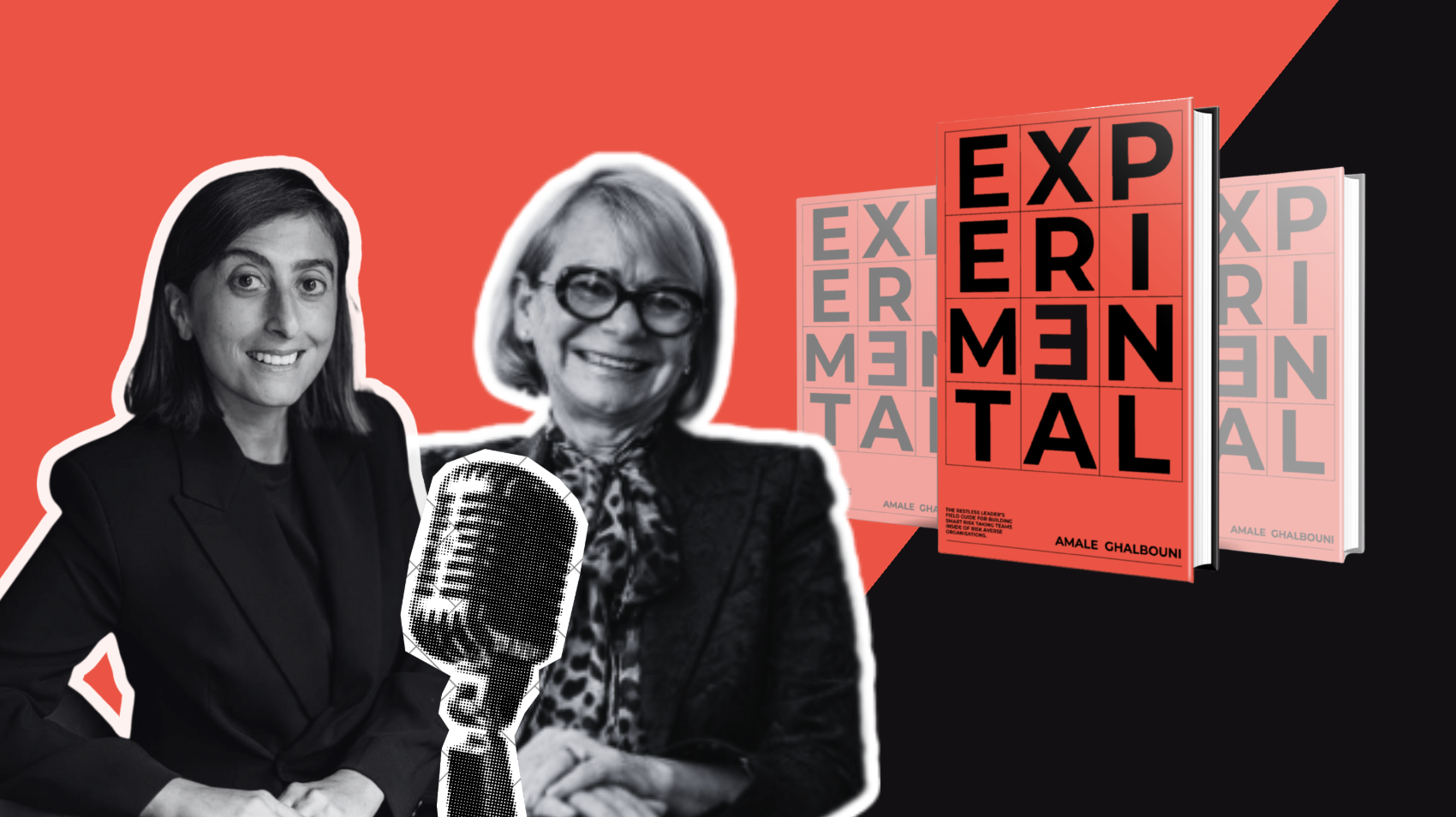
Amale Ghalbouni & Harriet Green in conversation. Excerpt taken from the conversation featured in Experimental
Harriet Green OBE has led listed companies, helped rescue Thomas Cook and held senior executive responsibility for more than 100,000 people at IBM.
Today, she describes herself as a founder, philanthropist and grandmother in her “third age”.
Her work looks different, but the restless impulse remains the same.
“I like to leave people and situations a little better than how I found them.”
Our conversation explores what courage looks like across those different stages, how leaders build connection at enormous scale and why transformation only becomes real when everyone understands what they need to do differently on Monday.
These insights feature in my book Experimental.
People, planet and profits
In 2007, Harriet presented her first strategy as CEO of Premier Farnell.
The business needed to move from its traditional catalogue model into e-commerce and digital communities.
Her strategy focused on:
People.
Planet.
Profits.
One investor offered blunt advice:
“Look, love, drop the people and the planet. Just focus on profits.”
Harriet ignored him.
She believed employees and customers were central to the transformation, and her chairman and board supported the direction.
The strategy succeeded, and the company was later sold at a premium based partly on that shift.
Harriet doesn’t describe the moment as especially courageous. She remembers feeling exasperated that the investor’s thinking belonged to another era.
Sometimes courageous leadership looks less like a dramatic stand and more like refusing to treat an outdated assumption as credible.
Courage means leaving the protected version of yourself
Harriet faced more demanding tests elsewhere.
She joined Thomas Cook when the business had around 17 weeks before running out of cash.
With the team, she raised more than £2 billion, returned the business to growth and moved the share price from 14p to 180p.
She later entered senior leadership at IBM, surrounded by some of the world’s strongest technical talent.
Each move required leaving a familiar world without knowing exactly what waited on the other side.
“Courage is that feeling where you absolutely have to existentially exit yourself, with everything screaming: get back in, be safe, be protected.”
The fear remains.
Courage is acting while part of you still wants to retreat.
Combine evidence, instinct and people
Harriet doesn’t recommend blind leaps.
She conducts rigorous due diligence and has rejected more than 20 companies she believed couldn’t be fixed.
She examines the brand, products, margins, capability and scale of the challenge.
Then comes the gut response.
Does the problem create energy? Is there something in the customers, people or opportunity she cares deeply about?
Finally, she considers trust.
Harriet has only once taken a role involving someone she didn’t entirely trust or like, and she doesn’t recommend repeating it.
Her smart-risk framework combines three questions:
What does the evidence say?
What does my instinct tell me?
Do I trust the people I’ll be doing this with?
A challenging opportunity isn’t enough. The people around the work determine whether courage becomes progress or exposure.
Only is lonely
Harriet’s experience has taught her not to be the only.
“Only is quite lonely.”
Don’t be the only woman on the board, the only person who understands digital or the only leader committed to transformation.
One determined individual can create movement. But if all the energy, knowledge and sponsorship sit with them, the wider organisation can wait for them to leave.
Transformation needs a coalition.
Who else sees the problem? Who has the expertise you lack? Who can influence the board? Who will support the direction when the first experiment disappoints?
Courage doesn’t mean acting alone.
It often begins with building enough connection and support to make success possible.
Connection opens the door
I first met Harriet when I was a junior contractor at Premier Farnell.
Every time she passed me, she said:
“Good morning, Amale.”
She knew my name and pronounced it correctly.
That small behaviour created a connection across a huge difference in seniority.
Harriet describes connection as opening a door. She compares it to neurons connecting across a synapse.
“If you make a connection that sticks, people are much more receptive to your communication.”
That matters because large-scale transformation requires trust.
Employees at Thomas Cook needed to believe the company could survive.
People at Premier Farnell needed to believe a catalogue business could become digital.
IBM employees needed to understand and support new ways of working across a vast organisation.
The strategy may be logical. People still need a reason to trust the person asking them to follow it.
Empathy, authenticity and logic
Harriet sees three qualities as essential to leadership communication.
Empathy shows that you understand something of the person’s work, pressure and experience.
Authenticity allows your real personality and values to appear, making it safer for others to bring more of themselves.
Logic gives people a direction they can follow.
“You can’t follow illogical people.”
Empathy without logic may feel warm but confusing.
Logic without empathy can produce a rational change nobody wants to support.
Transformation needs all three.
I understand what this means for you.
I’m showing up honestly.
Here’s why we’re doing it and what happens next.
Change lands on Monday
Harriet believes one factor separates transformations that succeed from those that fail:
Everyone knows their part.
“Everyone involved in the change knows what they’ve got to do differently on Monday.”
A leadership team can agree the strategy and communicate it to senior managers. That doesn’t mean the wider organisation understands it.
By the time the message reaches the front line, people may have heard the ambition without understanding what to stop, start or decide differently.
Transformation becomes real when employees know:
What changes in my work?
What remains the same?
Which decision can I now make?
What support will I receive?
What should I do differently on Monday morning?
This is where clarity and connection meet.
Build courage through practice
Harriet’s advice for leaders who are still hesitating is to gather a small, diverse group of people and start.
Use a workshop to surface the obstacles, worries and possibilities.
Choose one opportunity. Decide what can happen in the first week. Come back together, examine what happened and keep learning through the first month.
“The courage and the muscle memory to experiment comes with practice.”
A small failure teaches the team that the consequences weren’t catastrophic.
A small success provides proof that another way is possible.
The next risk becomes easier.
Harriet also uses three questions to bring fear into proportion:
What’s the best that could happen?
What’s the most likely outcome?
What’s the worst that could happen?
The worst credible outcome may reveal a risk you need to reduce. It may also be far more manageable than the vague fear surrounding it.
These ideas are central to Experimental: The Restless Leader’s Field Guide for Building High Performing, Change Ready Teams, my bestselling business book on leadership and transformation.
The book gives restless leaders a practical method for creating the connection, clarity and courage required to move.
It’s also the message at the heart of my work as a leadership and transformation keynote speaker.
You don’t need to begin with the full transformation.
Start with the people who believe something could work differently.
Then ask:
What could we try in the next 30 days that would build our evidence and our courage at the same time?
To unlock this conversation and all the other conversations featured in the book,
Grab your copy of Experimental now →
And if you’d like to bring these themes to your audience, get in touch or connect with me on Linkedin.