
Experimental with Amale Ghalbouni & Matt Barker on Building a High-Performance Culture in a Complex Organisation
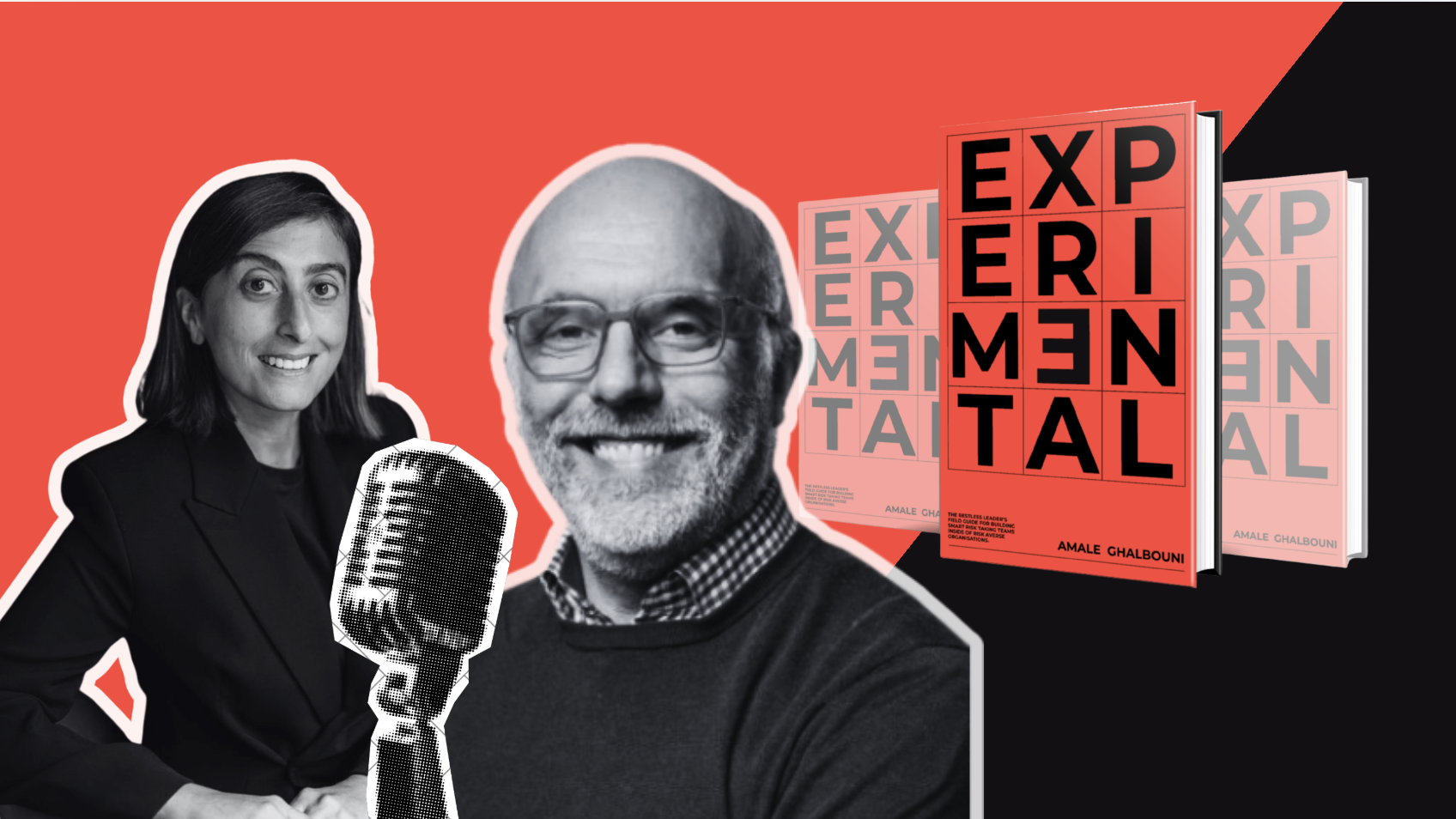
Amale Ghalbouni & Matt Barker in conversation. Excerpt taken from the conversation featured in Experimental
Performance problems are rarely fixed by telling people to work harder.
That’s one of the clearest lessons from my conversation with Matt Barker, Head of Performance at RELX.
Matt began his career in elite sport as an international middle-distance runner. He later studied behaviour change and coaching before helping organisations apply performance principles to the workplace.
Moving from external consulting into a large global business gave him a new perspective.
From the outside, you can identify what needs to change and challenge leaders to act. From the inside, you have to build support, navigate competing responsibilities and work with the systems that can slow an apparently simple idea to a crawl.
“At times, it is ridiculously difficult to get anything done,” Matt admitted.
That frustration will feel familiar to anyone who can see what needs to happen but can’t make the wider system move at the same speed.
These insights feature in my book Experimental.
High performance starts with the environment
Matt defines performance as doing the things you need to do to get the results you want.
The result is the outcome. Performance is the behaviour and activity that produces it.
That distinction matters because organisations often measure the result while paying much less attention to the conditions that created it.
Matt looks at high performance across individuals, teams and managers.
Individuals need the awareness and autonomy to improve their work.
Teams need shared goals and the ability to collaborate across boundaries.
Managers need to hold useful conversations about strengths, expectations and development.
Culture sits around all three.
“Our environment shapes our behaviours,” Matt said.
Culture isn’t the soft work beside performance. It influences how people make decisions, respond to pressure and treat one another when something goes wrong.
A high-performance culture combines high challenge with high support.
Challenge without support creates fear and exhaustion. Support without challenge creates comfort without enough progress.
Leaders need to set meaningful expectations while creating the safety and capability people need to meet them.
Why clear leadership messages still get lost
Matt found that strategic intent at the top of the organisation was often relatively clear.
The problem appeared as the message moved through the business.
Each level interpreted it through its own pressures, incentives and understanding. By the time the change reached the teams expected to deliver it, the original meaning had weakened.
“Communication and change isn’t a top-down thing. It’s a collective thing.”
Sending a clear message doesn’t guarantee shared understanding.
Leaders need to find out what people heard, how they interpreted it and what they think the change means for their role.
Clarity exists when people understand the direction, their contribution and what they should do next.
That requires conversation, not simply cascading another presentation.
Fear creates defensive behaviour
Matt sees fear rising inside organisations.
AI, restructuring and repeated uncertainty create a sense that roles, identities and livelihoods may be at risk.
“When you’re in an environment of fear and threat, there’s a selfish intent that goes on.”
People protect their territory. They hold onto decisions and information. They resist collaboration because giving something away may make them look less valuable.
This is the pattern I call the Big Freeze in Experimental.
When threat rises and autonomy falls, people play safe at the exact moment the organisation needs them to experiment, share and adapt.
That response isn’t necessarily evidence of a bad attitude.
It may be a rational response to the environment leaders have created.
You can’t motivate people out of defensive behaviour without addressing what’s making them feel threatened.
Ambition can become a trap
Matt describes himself as highly ambitious.
He sees multiple problems and wants to fix all of them.
“I don’t let myself down with a lack of ambition.”
Inside a complex organisation, that strength can create its own obstacle.
Trying to move too many things at once spreads attention, confuses stakeholders and makes it harder to build a convincing coalition.
Matt has learnt to connect his work more tightly to the organisation’s strategy and focus on fewer priorities.
Restless leaders often see the whole system. Progress usually begins with one part of it.
Choose a problem that matters enough to gain attention and is contained enough to move.
Make friends with the people slowing you down
Some of Matt’s biggest shifts came from changing how he viewed governance teams and central functions.
At first, they looked like barriers. They introduced processes, asked difficult questions and slowed the work.
Over time, he began to understand what they were protecting.
“I’ve had to learn to make friends with those cogs in the chain that feel like they slow the machine down.”
Their job wasn’t necessarily to prevent change. It was to manage organisational risk, protect standards and stop poorly designed work from creating larger problems.
Matt started learning more about their responsibilities and explaining his own.
The conversation shifted from “your work or mine” to:
How can your work and my work succeed together?
The person frustrating you may be a teammate with a different job in the same system.
That doesn’t mean every process is necessary. It means you’ll be more effective challenging it once you understand why it exists.
When a failed experiment reveals the real problem
Matt shared an experiment that didn’t deliver its intended output.
After months of trying to align different groups, his boss told him to stop waiting for perfect conditions and make something happen.
Matt moved forward with work designed to articulate the organisation’s high-performance culture.
The team developed the content and reached the point of preparing to record a video series.
Then the project exposed a deeper issue.
Senior leaders didn’t yet share the same understanding of what the culture should look like.
The work stopped.
“We went backwards to go forwards.”
On paper, the experiment failed. The videos weren’t produced.
In practice, it prevented the organisation from launching a polished description of a culture its own leadership team hadn’t agreed on.
The project surfaced misalignment before the business invested more money and asked thousands of people to act on a confused message.
That’s the value of a well-contained experiment.
It doesn’t always validate your idea. Sometimes it reveals that an earlier condition needs attention first.
Experiments still have a cost
Matt is honest that the experience consumed time and emotional energy.
Calling something an experiment doesn’t make the effort free.
A smart risk needs a survivable cost, a valuable learning question and a clear point where the organisation can stop.
The experiment should be smaller than the full commitment and useful enough to improve the next decision.
This is one of the ideas I explore in Experimental: The Restless Leader’s Field Guide for Building High Performing, Change Ready Teams, my bestselling business book on leadership and transformation.
High performance isn’t created by piling more pressure onto people. It comes from designing the environment, direction and support that make better behaviour possible.
That message also sits at the heart of my work as a transformation keynote speaker.
Spend time with the people you think are blocking progress. Understand what they’re responsible for and what they fear will happen.
Then ask:
How can your work and my work succeed together?
To unlock this conversation and all the other conversations featured in the book,
Grab your copy of Experimental now →
And if you’d like to bring these themes to your audience, get in touch or connect with me on Linkedin.