Writing a book taught me a few things.
One of them is that explaining something complex in a really simple way is hard.
When I started writing Experimental, I had years of experience, mountains of research, interviews, stories, frameworks and ideas I wanted to share.
The problem?
I wanted to share ALL OF THEM.
And every time I thought I'd finally explained something clearly, I'd read it back and realise I'd somehow managed to make a relatively simple idea sound like an academic dissertation. 🫠
So I'd cut. Rewrite. Rearrange.
And then cut some more. I left a whole third of the first draft on the cutting room floor.
And the book is a tonne better for it. And it reminded me of something I learned at business school: the art of the KISS (aka Keep It Simple Stupid).
No, that doesn't mean ignoring the complexity behind an idea.
Yes, it means doing the hard work of making it understandable to someone who doesn't have a crystal ball to read your mind.
The trouble with sounding clever
Every week, I spend time talking to (or, more accurately, about) people who use an extraordinary number of words to say surprisingly little.
We're going to leverage synergies.
Unlock cross-functional value.
Drive strategic alignment across key priorities.
Lovely.
But what does any of that actually MEAN!?
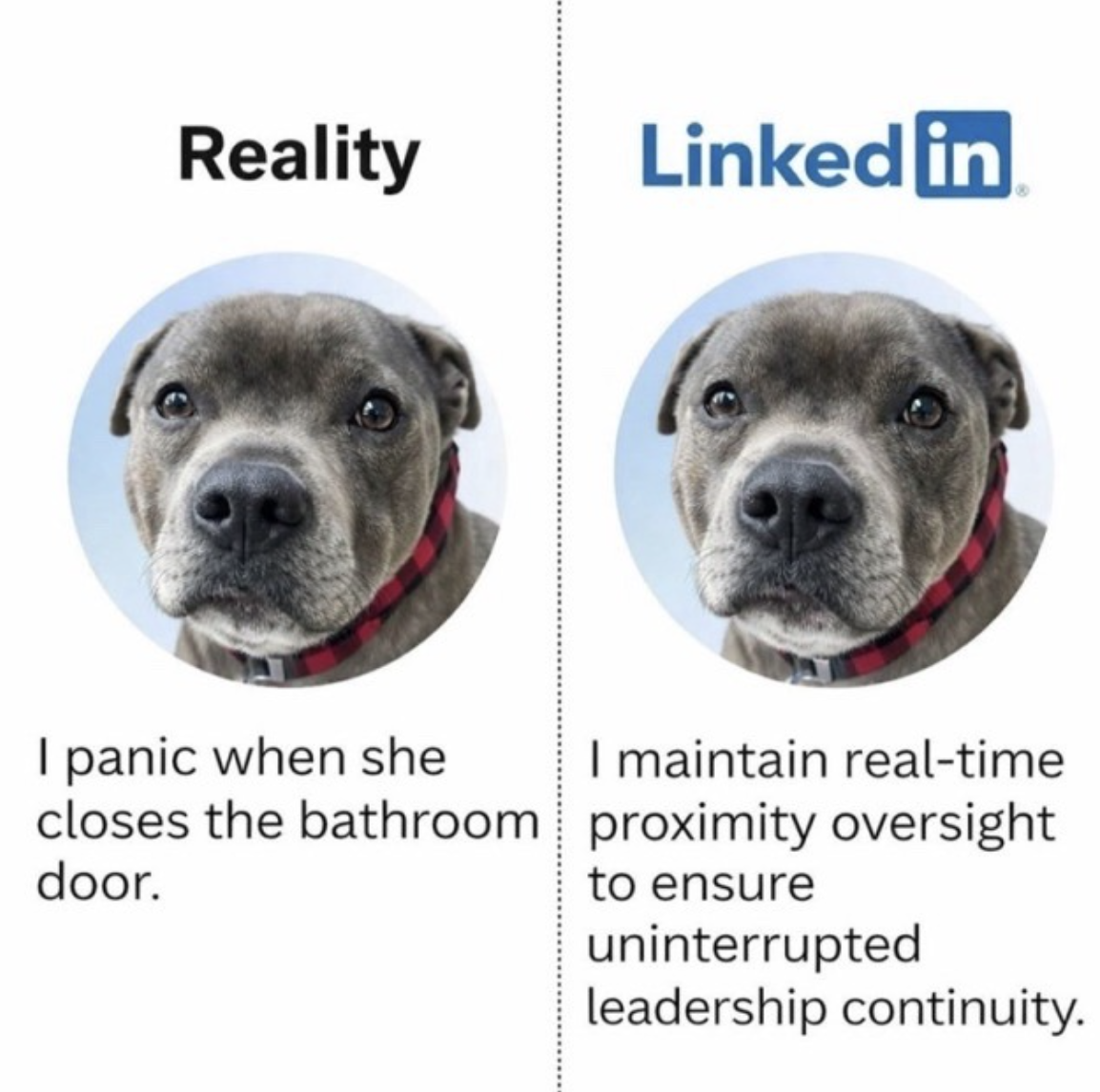
And, more importantly, what is someone supposed to DO with it?
I've started wondering whether some of our communication problems at work are actually thinking problems.
Sometimes the instructions aren't clear because the person giving them hasn't quite worked out what they want yet.
And when that happens, the confusion gets passed down the organisation.
People ask for clarification. Different teams interpret the same instruction differently. Meetings multiply and outcomes dwindle.
Eventually, everyone is very busy doing something, but nobody's entirely sure whether it's anything useful?
I don't think clarity comes from finding fancier words.
I think it comes from doing the hard work of deciding what genuinely counts, what doesn't, and what you actually want to happen when someone hears your message.
Which, annoyingly, is much harder than adding another slide to an already long deck.
Your one bold move:
Make one complicated instruction ridiculously simple.
Find a priority, objective or request you've recently shared with your team.
Try rewriting it in one sentence that answers:
Who needs to do what, and what should be different when they're done?
Then ask someone who wasn't involved in writing it what they think it means.
If they interpret it differently, you might have found something worth clarifying before everyone spends the next three weeks working on it.
Happy experimenting!
Amale
Whenever you're ready, here's how we can work together:
📕 Want more ideas to put into practice? Grab a copy of Experimental, my bestselling book on building high-performing, change-ready teams. Get the book →
🎤 Want to bring this thinking to your next event? Book me to speak about leadership, change and innovation. Explore my keynotes →
💥 Want to transform how your team works together? Bring in The Brick Coach for hands-on workshops and programmes that help your people make change happen. Explore our experiences →